


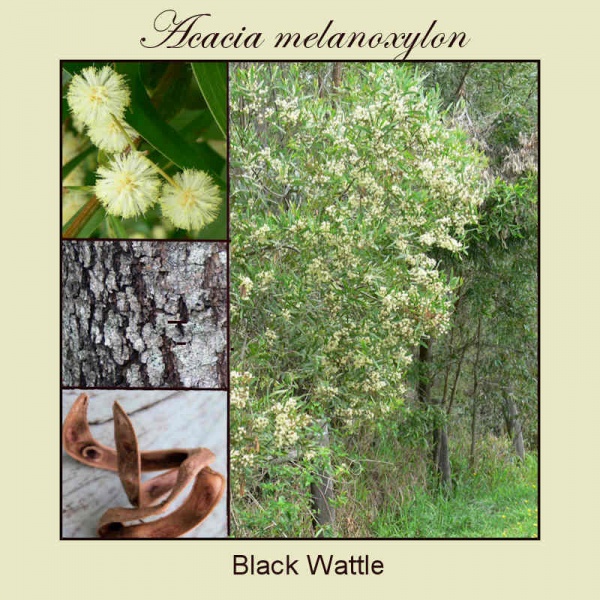
Scientific Name: Acacia melanoxylon
-
Pronunciation:ah-KAY-sha mel-ah-NOCKS-ah-lon
-
Common Name:Blackwood
-
Type:
-
Family:FABACEAE
-
Status:Common
-
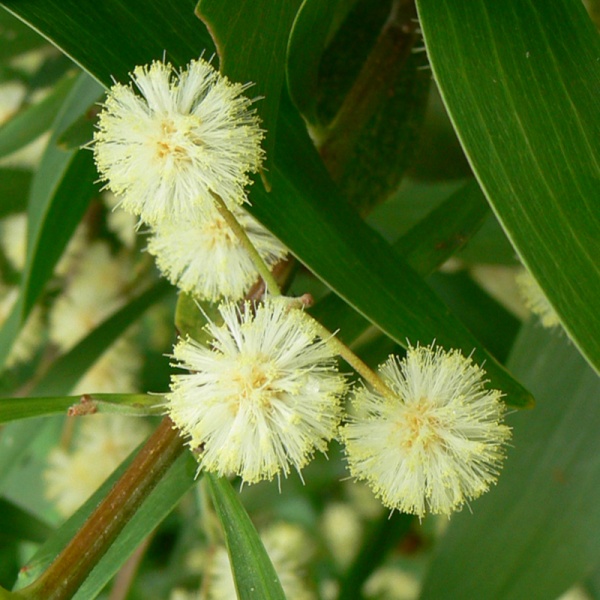
Flowers:Summer,cream, balls in axillary racemes
-
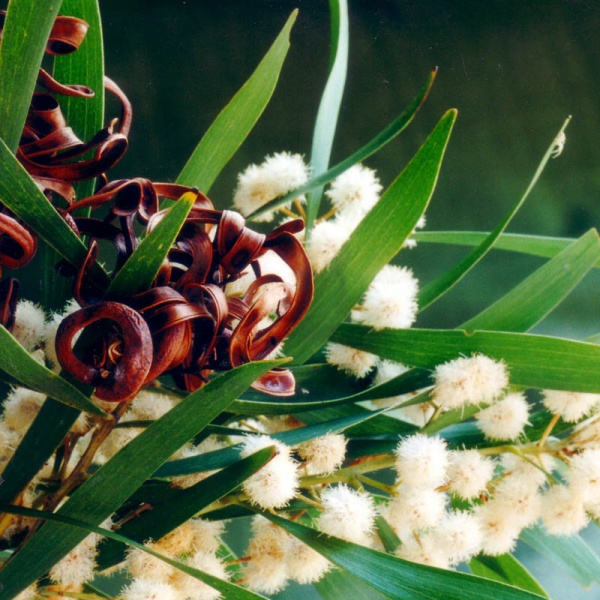
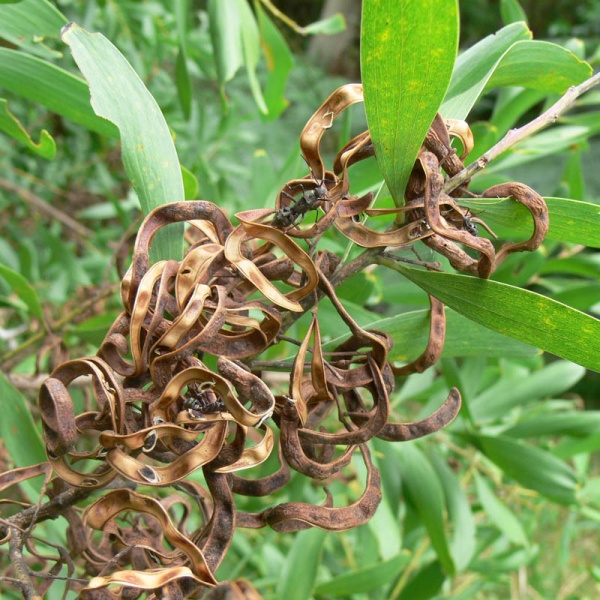
Fruit:Pod irregularly coiled
-
Flowers Color:White
-
Fruit Color:Brown
-
Vegetation Type:Wet Eucalypt Forest
-
Species List:EdingtonDr, Craft, Bush food, Coolum High, Pomona School Oval, Noosa High School, Mill Point, Johns, Stratford Park, Janet, Cranks Creek, Batianoff 87, NNS, Leslie Drive Roundabout, TAFE, Noosa Banks, Kin Kin Scrub, Dandaloo, BHNR, Upper Yandina Creek, Heritage Park, Wallace Park,
Cultural Notes
Cabinet timber - slower growing trees in southern Australia produce dark, strong, hard timber that polishes to a high gloss and is figured with beautifully striped, almost chequered pattern (Nicholson)||Bush medicine: Bathe in bark infusion to relieve rhumatism||Acacia species - Many wattle species have gum that exudes from their stems and trunks. The pale gums can be sucked like candy or soaked in water as jelly.||Source of fibre.||Bush food: gum eaten, seeds eaten ground - highly nutritious.||Twigs and bark may have been used as a fish poison?||
Identification Notes
Leaves: warty with 5 veins-||Flowers: balls in axillary racemes||Fruit: coiled and tangled seed pods release shiny black seeds that hang on a long, double-folded thread.||
Associated Fauna
Butterfly laval food plant: Tailed Emperor and Imperial Hairstreak (Common Imperial Blue), pictured.|| Bird attracting: All acacia plants attract birds. Yellow-tailed Black-Cockatoo eat larvae of wood -boring insects.||Older trees provide useful nesting hollows.
Landscaping Notes
Noosa Council Preferred Species list||Rapid growth makes it useful for protecting more sensitive plants.|