


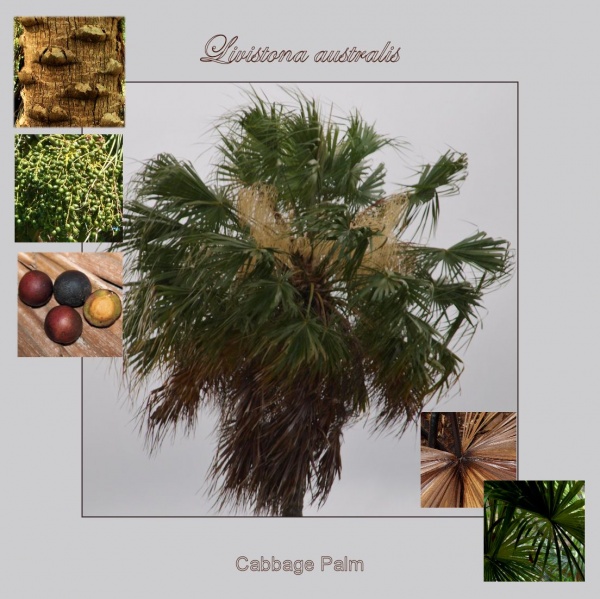
Scientific Name: Livistona australis
-
Pronunciation:liv-is-TONE-ah aus-TRAH-lis
-
Common Name:Cabbage Palm
-
Type:
-
Family:ARECACEAE
-
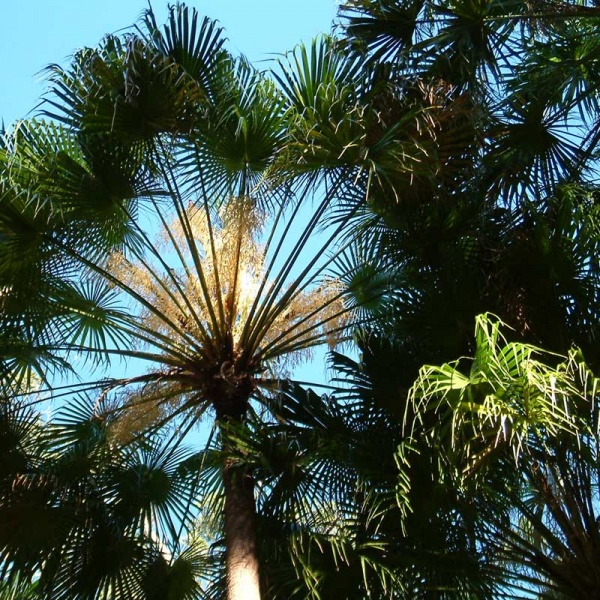
Flowers:Yellowish-cream flowers on spikes to 1 metre, summer
-
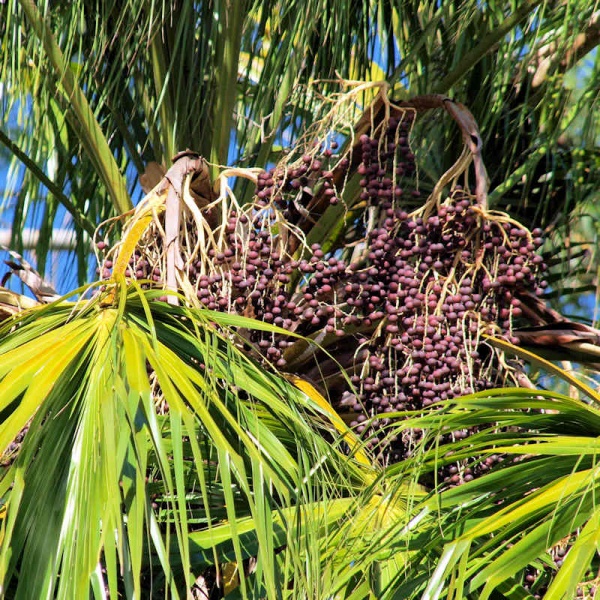
Fruit:Red fruit to 18mm, ripens to black
-
Vegetation Type:Wet Coastal forest
-
Species List:EdingtonDr, Cooroibah, Arthur Harrold NR,Bush food, NLTalks2010, Weyba Nature Refuge, Eumarella Rd., Coolum High, Boreen Point Caravan Park, Wooroi Day Use Area Tracks, Wooroi Day Use Area Tracks, St. Teresa\'s, Meridan College, Pacific Lutheran College, Cooroibah26.4.09, Wooroi Palm Grove, BSDoonan, Cooloothin Corner, Old Tewantin, Tewantin Forest Gyndier, Mill Point, Johns, Cooroibah Conservation Park, Cooroibah Bushland Reserve, Regional Ecosystem 12.2.5. Regional Ecosystem 12.3.5. Cranks Creek, NNS, Upper Yandina Creek, Boreen Point, TAFE, NNP Tanglewood, BHNR, NNP Palm Grove, Noosa Banks, Dandaloo, Stratford Park, Heritage Park,
Cultural Notes
TAKE CARE! Some information about bush foods and medicines may be anecdotal. Correct identification and preparation is essential:
Bush food: New growth cooked and eaten Gum chewed as a lolly. NOTE!! Cutting the growing bud kills tree.
Leaves made into hats for early colonists. Bags, baskets, fishing nets and lines were made by aborigines.
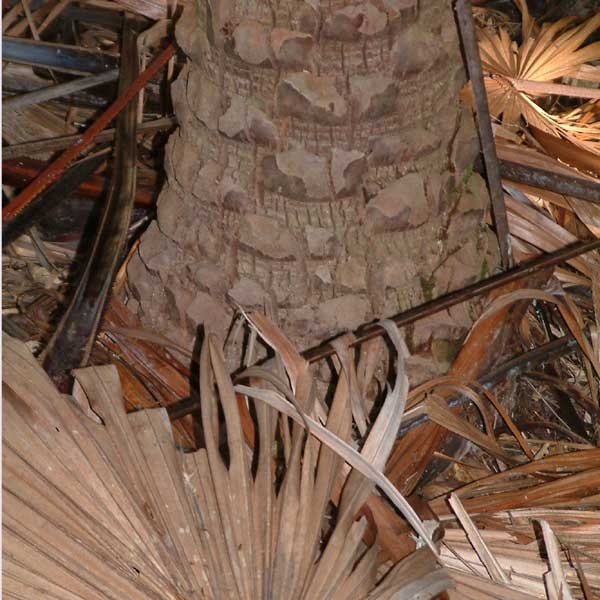
Tall trunks have hard outer shell enclosing a broad fibrous core. Early settlers split the trunk, removed the core to make a useful pig trough.
Identification Notes
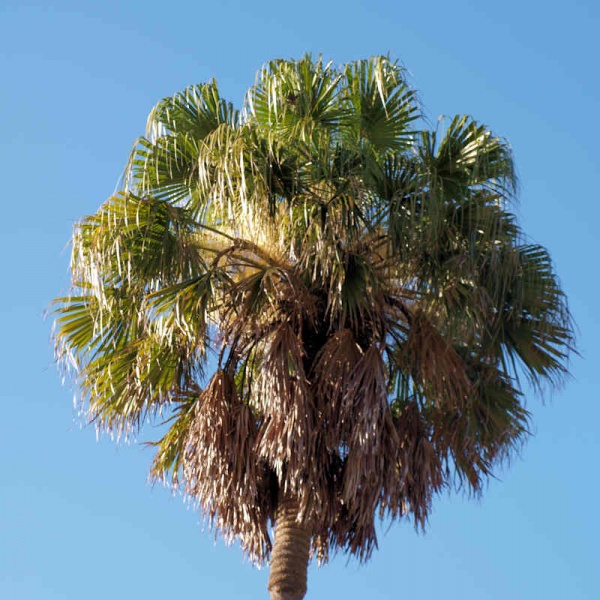
Single trunk. Large fan-shaped leaves, to 2 metres.
Associated Fauna
Bird and butterfly attracting. Butterfly host plant: Orange palmdart, Yellow palmdart.
Landscaping Notes
Stately and iconic palm for a large area. Slow growing. Prefers wet position in part shade. Indoor pot plant potential.