


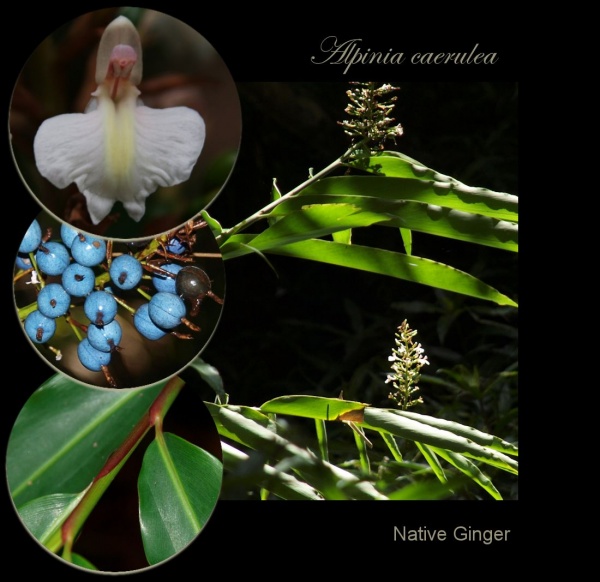
Scientific Name: Alpinia caerulea
-
Pronunciation:al-PEEN-ee-ah sir-RULE-ee-ah
-
Common Name:Native Ginger
-
Type:
-
Family:ZINGIBERACEAE
-
Status:Common
-
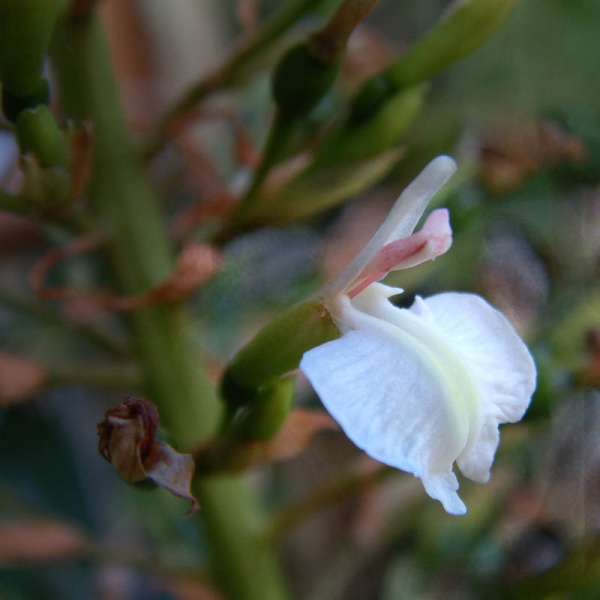
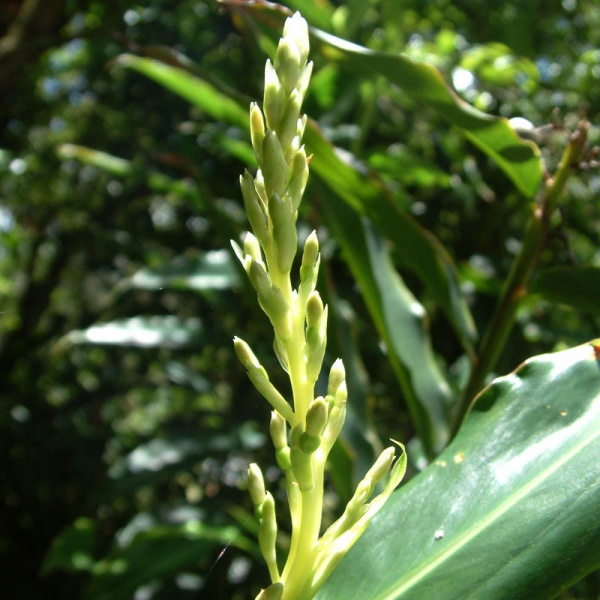
Flowers:White, spring
-
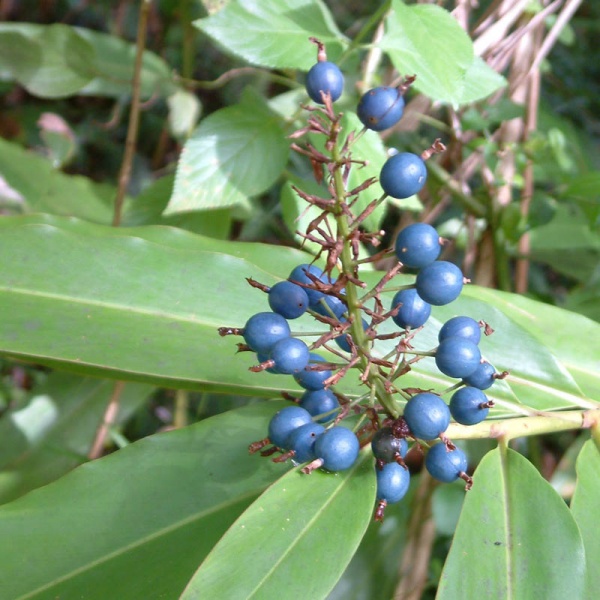
Fruit:Ovoid capsue 15 cm long - remain on plant for months during autumn.
-
Flowers Color:White
-
Fruit Color:Blue
-
Vegetation Type:Rainforest and Wet Eucalypt Forest. Moist gullies and hillsides of Dry Rainforests
-
Species List:Community Gardens, Kennilworth Fig Tree Walk, Craft, Bush food, Biosphere Day Noosa Woods, NNP Palm Grove, Wooroi Day Use Area Tracks, Sunshine Beach Primary, Pacific Lutheran College, Wooroi Palm Grove, BSDoonan, Cooloothin Corner, Banana, Tewantin Forest Gyndier, Fraser Island, Johns, Janet, Upper Yandina Creek, Leslie Drive Roundabout NNP Tanglewood Kin Kin Scrub, Heritage Park, NC,
Cultural Notes
TAKE CARE! Some information about bush foods and medicines may be anecdotal. Correct identification and preparation is essential:
Bush food: Aboriginal people ate flesh surrounding seeds as well as root tips. They used leaves to wrap and tenderise meat for cooking. Young rhizomes may also be eaten, and taste faintly of ginger. Seed pulp edible Leaves used to roof shelters.
Identification Notes
Erect, multi-stemmed herb, forming clumps. |Tuberous rhizomes ||
Landscaping Notes
Noosa Council Preferred Species list. Shade-loving. Likes moist, well-drained soils. Hardy species, prefers shade but tolerates sun. Seeds planted fresh will germinate in two months, or divide rhizome to make new plants. ||Indoor, pot plant potential.||Propagation by seed or division.||Feature foliage||